Our industry-leading portfolio of colorants and color design services enable you to differentiate and win. We advance our customers’ projects from concept to commercialization by engaging and helping them translate their design needs into intelligent brands and applications. We support you from idea to commercial introduction with experienced associates, a global reach and with our enthusiasm for creativity.
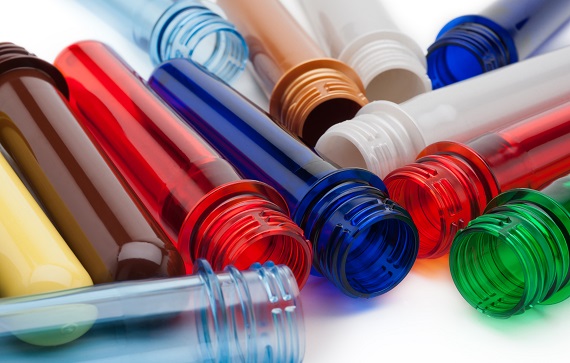
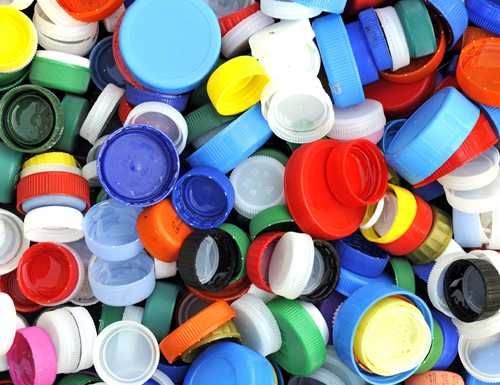
There are many plastic products around us, such as plastic bottles, stationery, and food containers (trays). These plastic products are not originally colored. Plastics (resin) are nearly colorless (milky-white). Colorants such as pigments are added to produce plastic products in various colors.
There are roughly two methods of coloring: external coloring and internal coloring. External coloring is a method of coloring the surface of plastics. It applies to printing, coating, and plating. Internal coloring is a method of coloring plastics by kneading colorants into them. Unlike external coloring, materials are colored evenly up to the inside, because colorants are mixed with plastics. Colorants used for internal coloring are generically called Plastic Colorants.
Types of plastic colorants mainly include masterbatche’s, colored pellets, colored compounds, Dry Color, Paste Colors, and Liquid Masterbatch. They are mixed with natural pellets (*plastics in a grain form before colorants are added) and molded to produce plastic products.
Chawla colorant solutions are available in masterbatch forms. Pigments are organic or inorganic particles added to the polymer base to give a specific color or functional benefits the plastic. Plastic colorants in pellet (grain) form- Pigments are kneaded inside at a high concentration. You can easily change color tones by adjusting the amount of mixing with natural pellets. They feature excellent dispersion, and even and beautiful coloring. Also, there is no need to worry about scattering and contamination of machinery and materials, and it is easy to handle. They outperform colored pellets in terms of cost performance. Masterbatche’s can provide various colors and functions by kneading colorants, such as pigments or functional materials, into pellets as a base (resin materials).
Contact our experts for more information or to discuss your polymer needs.